| title | Tutorial: Enable the five slowest queries sample widget - SQL Operations Studio (preview) | Microsoft Docs |
|---|---|
| description | This tutorial demonstrates how to enable the five slowest queries sample widget on the database dashboard. |
| ms.custom | tools|sos |
| ms.date | 03/15/2018 |
| ms.prod | sql |
| ms.reviewer | alayu; sstein |
| ms.suite | sql |
| ms.prod_service | sql-tools |
| ms.component | sos |
| ms.tgt_pltfrm | |
| ms.topic | tutorial |
| author | stevestein |
| ms.author | sstein |
| manager | craigg |
This tutorial demonstrates the process of adding one of [!INCLUDEname-sos]'s built-in sample widgets to the database dashboard to quickly view a database's five slowest queries. You also learn how to view the details of the slow queries and query plans using [!INCLUDEname-sos]'s features. During this tutorial, you learn how to:
[!div class="checklist"]
- Enable Query Store on a database
- Add a pre-built insight widget to the database dashboard
- View details about the database's slowest queries
- View query execution plans for the slow queries
[!INCLUDEname-sos] includes several insight widgets out-of-the-box. This tutorial shows how to add the query-data-store-db-insight widget, but the steps are basically the same for adding any widget.
This tutorial requires the SQL Server or Azure SQL Database TutorialDB. To create the TutorialDB database, complete one of the following quickstarts:
- [Connect and query SQL Server using [!INCLUDEname-sos-short]](quickstart-sql-server.md)
- [Connect and query Azure SQL Database using [!INCLUDEname-sos-short]](quickstart-sql-database.md)
The widget in this example requires Query Store to be enabled.
-
Right click the TutorialDB database (in the SERVERS sidebar) and select New Query.
-
Paste the following Transact-SQL (T-SQL) statement in the query editor, and click Run:
ALTER DATABASE TutorialDB SET QUERY_STORE = ON
To add the slow queries widget to your dashboard, edit the dashboard.database.widgets setting in your User Settings file.
-
Open User Settings by pressing Ctrl+Shift+P to open the Command Palette.
-
Type settings in the search box and select Preferences: Open User Settings.
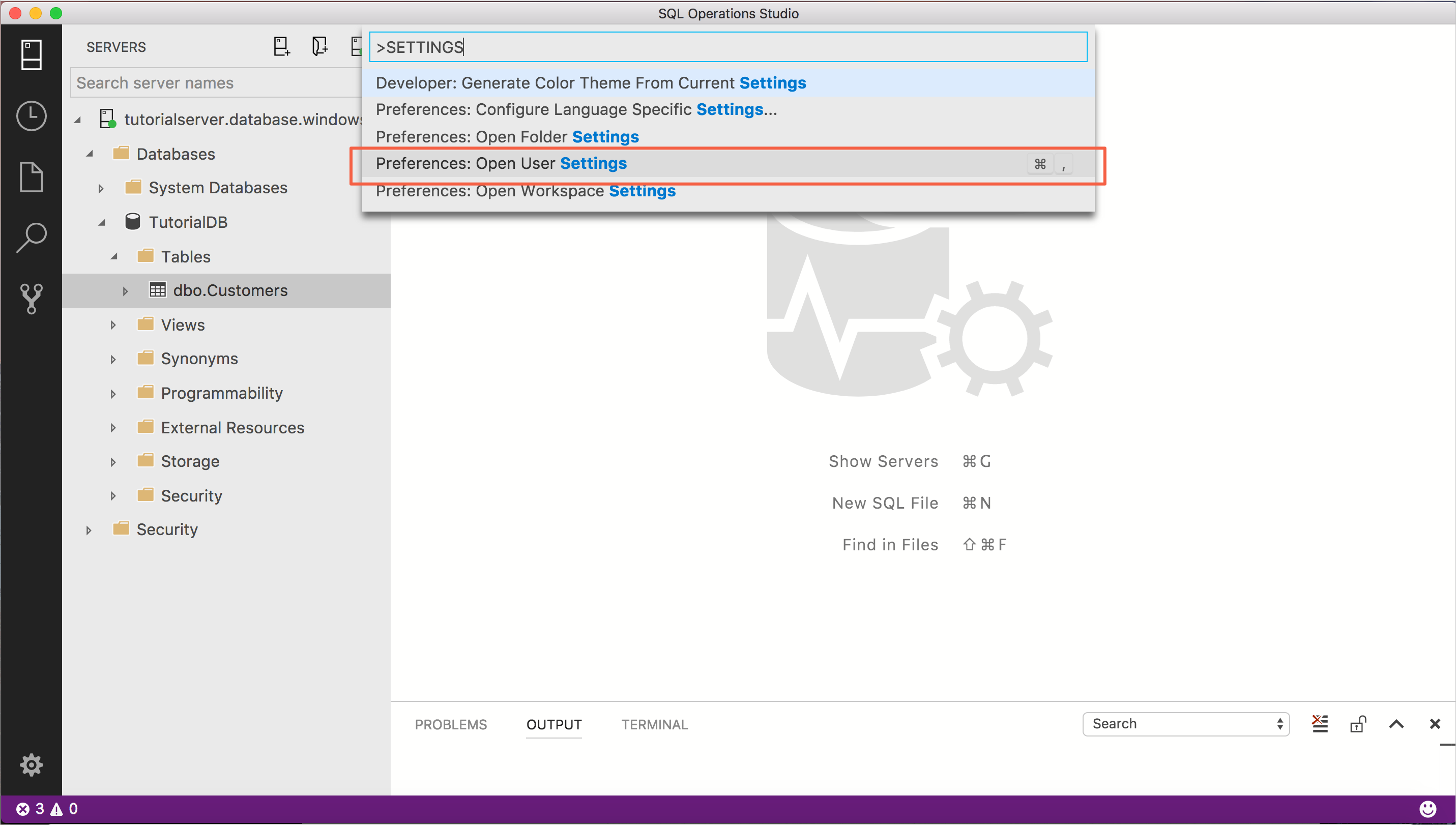
-
Type dashboard in the settings search box and locate dashboard.database.widgets.

-
To customize the dashboard.database.widgets settings you need to edit the dashboard.database.widgets entry in the USER SETTINGS section (the column in the right side). If there is no dashboard.database.widgets in the USER SETTINGS section, hover over the dashboard.database.widgets text in the DEFAULT SETTINGS column and click the pencil icon that appears to the left of the text and click Copy to Settings. If the pop-up says Replace in Settings, don't click it! Go to the USER SETTINGS column to the right and locate the dashboard.database.widgets section and advance to the next step.
-
In the dashboard.database.widgets section, add the following:
{ "name": "slow queries widget", "gridItemConfig": { "sizex": 2, "sizey": 1 }, "widget": { "query-data-store-db-insight": null } }, -
If this is the first time adding a new widget, the dashboard.database.widgets section should look similar to this:
"dashboard.database.widgets": [
    {
        "name": "slow queries widget",
        "gridItemConfig": {
            "sizex": 2,
            "sizey": 1
        },
        "widget": {
            "query-data-store-db-insight": null
        }
    },
    {
        "name": "Tasks",
        "gridItemConfig": {
            "sizex": 1,
            "sizey": 1
        },
        "widget": {
            "tasks-widget": {}
        }
    },
    {
        "gridItemConfig": {
            "sizex": 1,
            "sizey": 2
        },
        "widget": {
            "explorer-widget": {}
        }
    }
]
-
Press Ctrl+S to save the modified User Settings.
-
Open the Database dashboard by navigating to TutorialDB in the SERVERS sidebar, right-click, and select Manage.

-
The insight widget appears on the dashboard:


-
To view additional information for an insight widget, click the ellipses (...) in the upper right, and select Show Details.
-
To show more details for an item, select any item in Chart Data list.

-
Right-click the cell to the right of query_sql_txt in Item Details and click Copy Cell.
-
Close the Insights pane.

-
Open a new query editor by pressing Ctrl+N.
-
Paste the query text from the previous steps into the editor.
-
Click Explain.
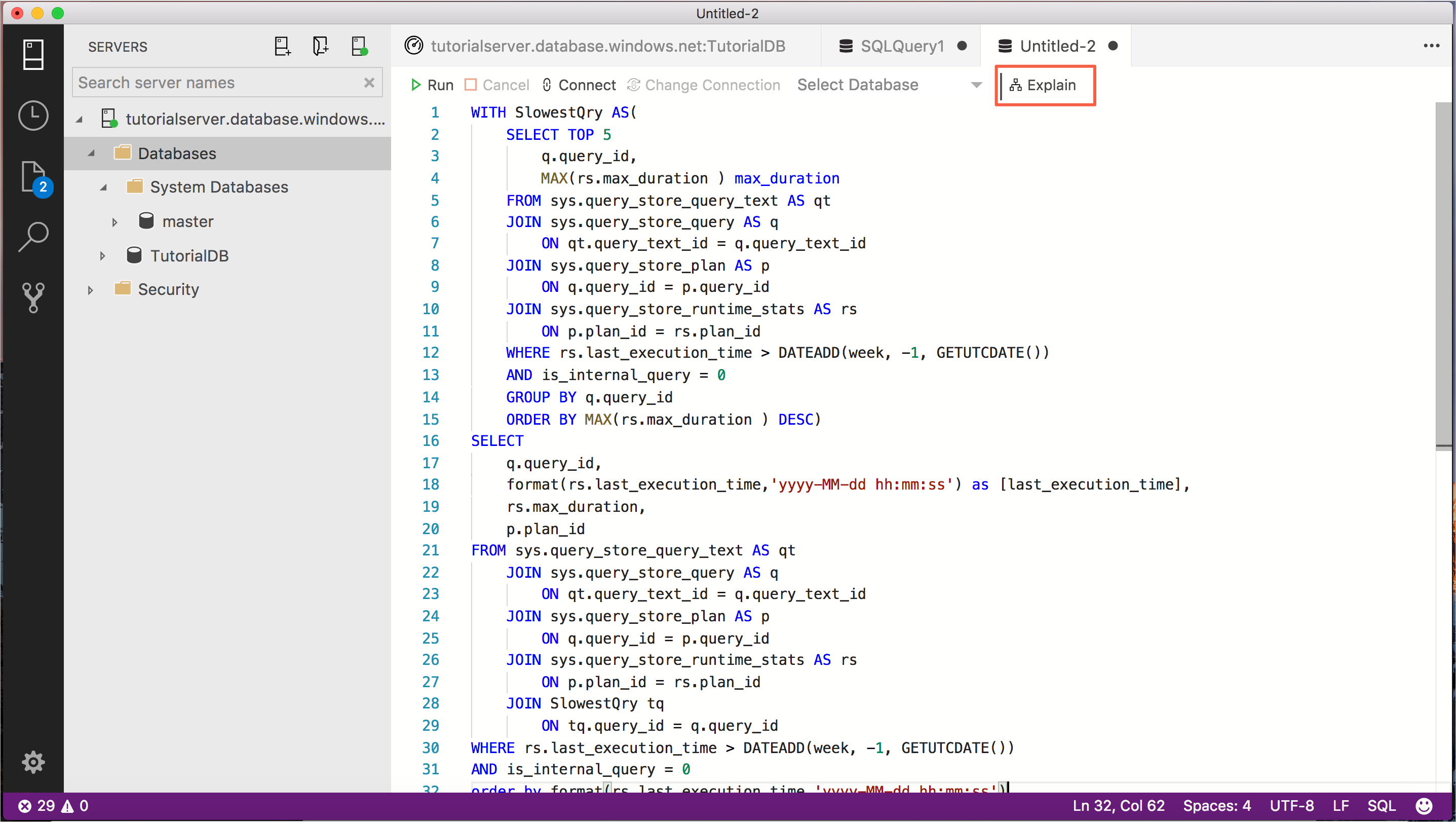
-
View the query's execution plan:
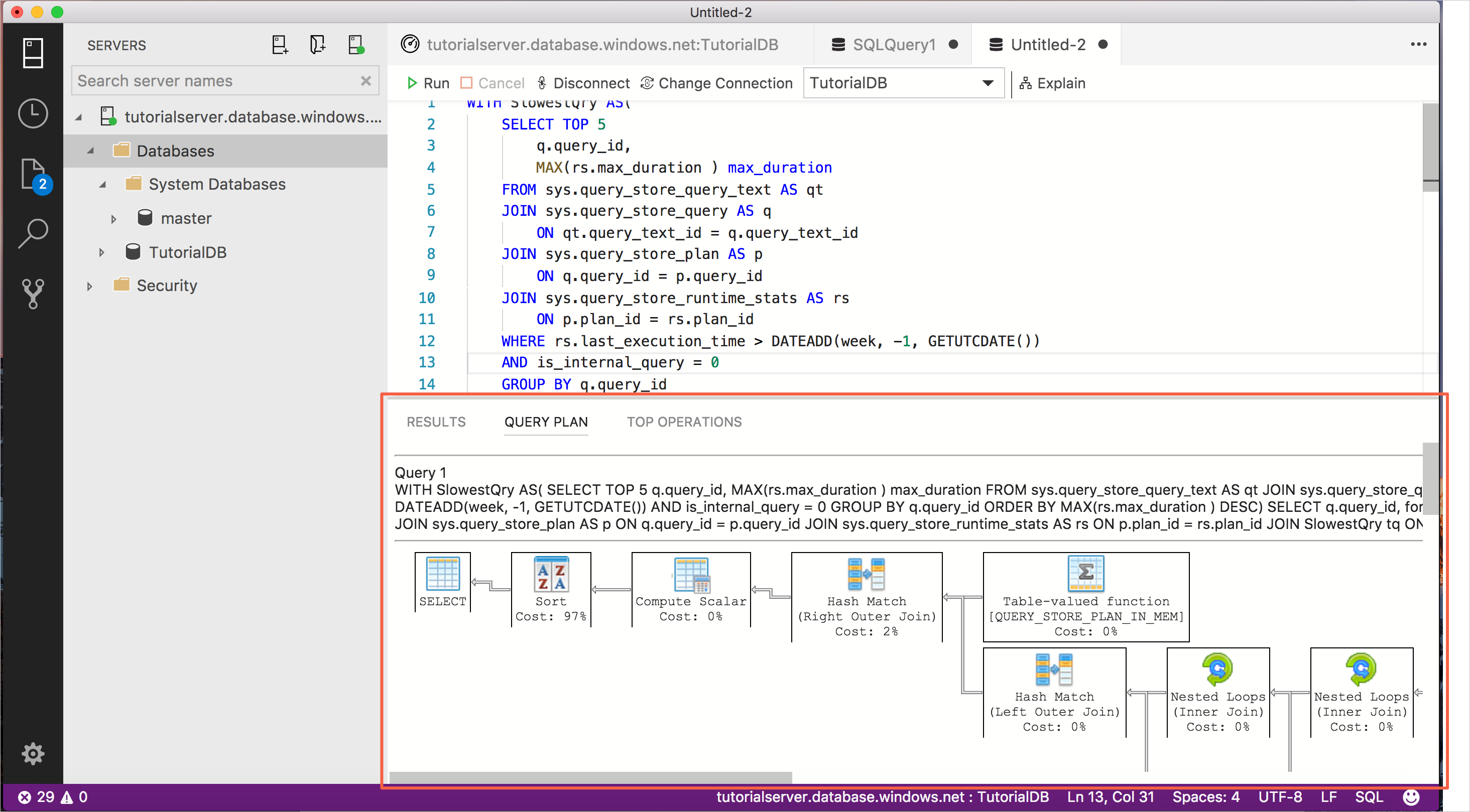


-
Open the insight detail dialog.
-
Select one of the query items.
-
Right-click query_plan value and select Copy Cell
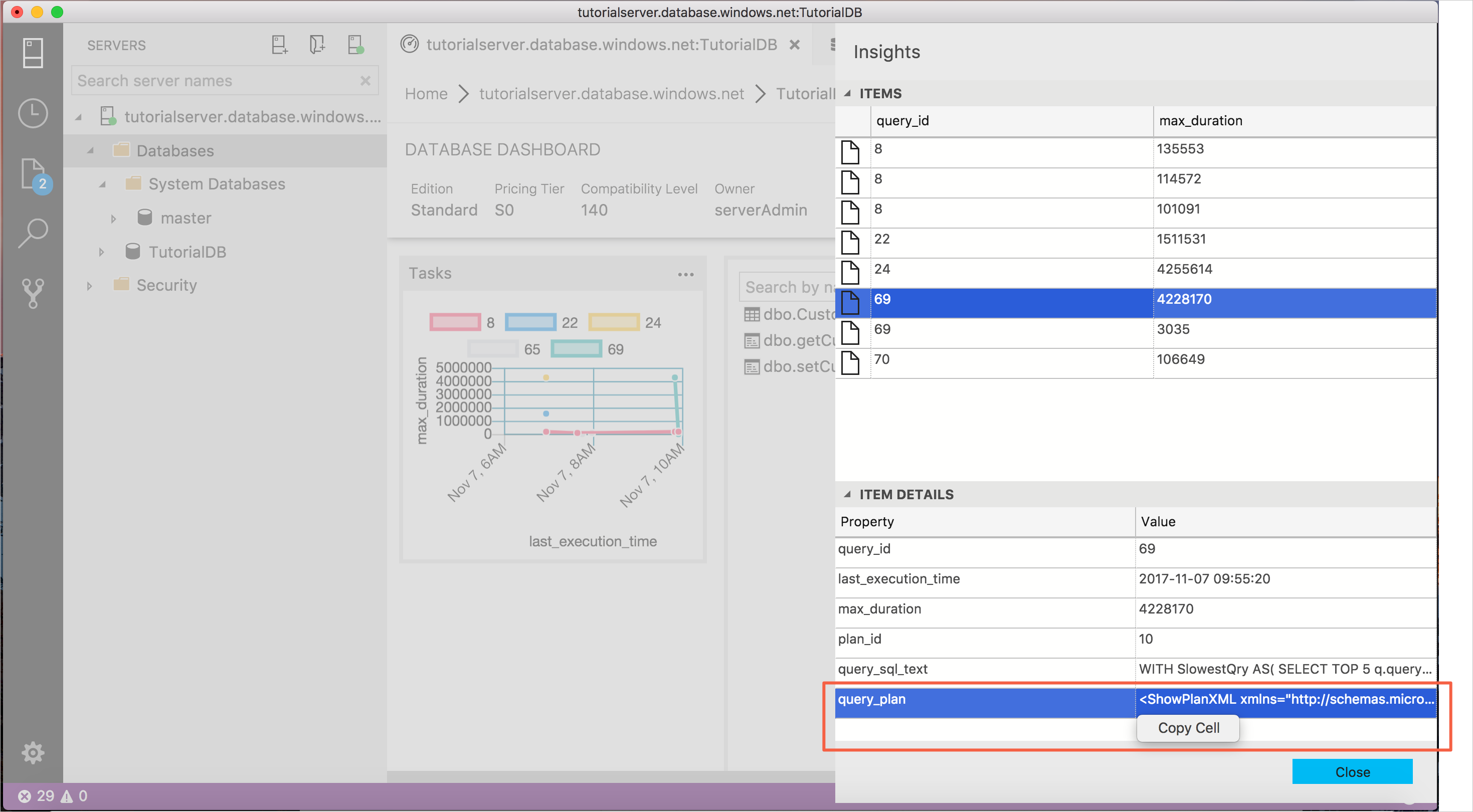
-
Press Ctrl+N to open a new editor.
-
Paste the copied plan into the editor.
-
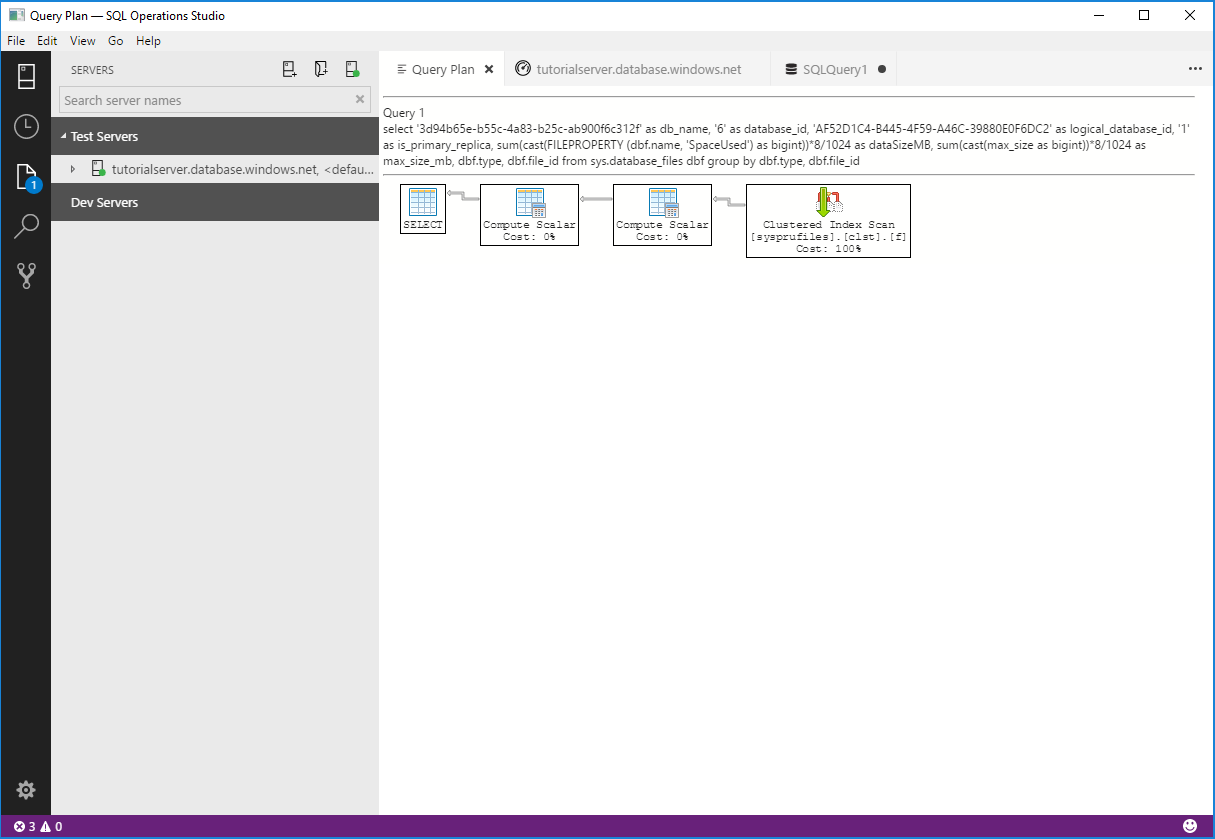
Press Ctrl+S to save the file, and change the file extension to .sqlplan. .sqlplan does not appear in the file extension dropdown, so just type it in. For this tutorial, name the file slowquery.sqlplan.
-
The query plan opens in [!INCLUDEname-sos]'s query plan viewer:


In this tutorial, you learned how to:
[!div class="checklist"]
- Enable Query Store on a database
- Add an insight widget to the database dashboard
- View details about the database's slowest queries
- View query execution plans for the slow queries
To learn how to enable the table space usage sample insight, complete the next tutorial:
[!div class="nextstepaction"] Enable the table space sample insight widget